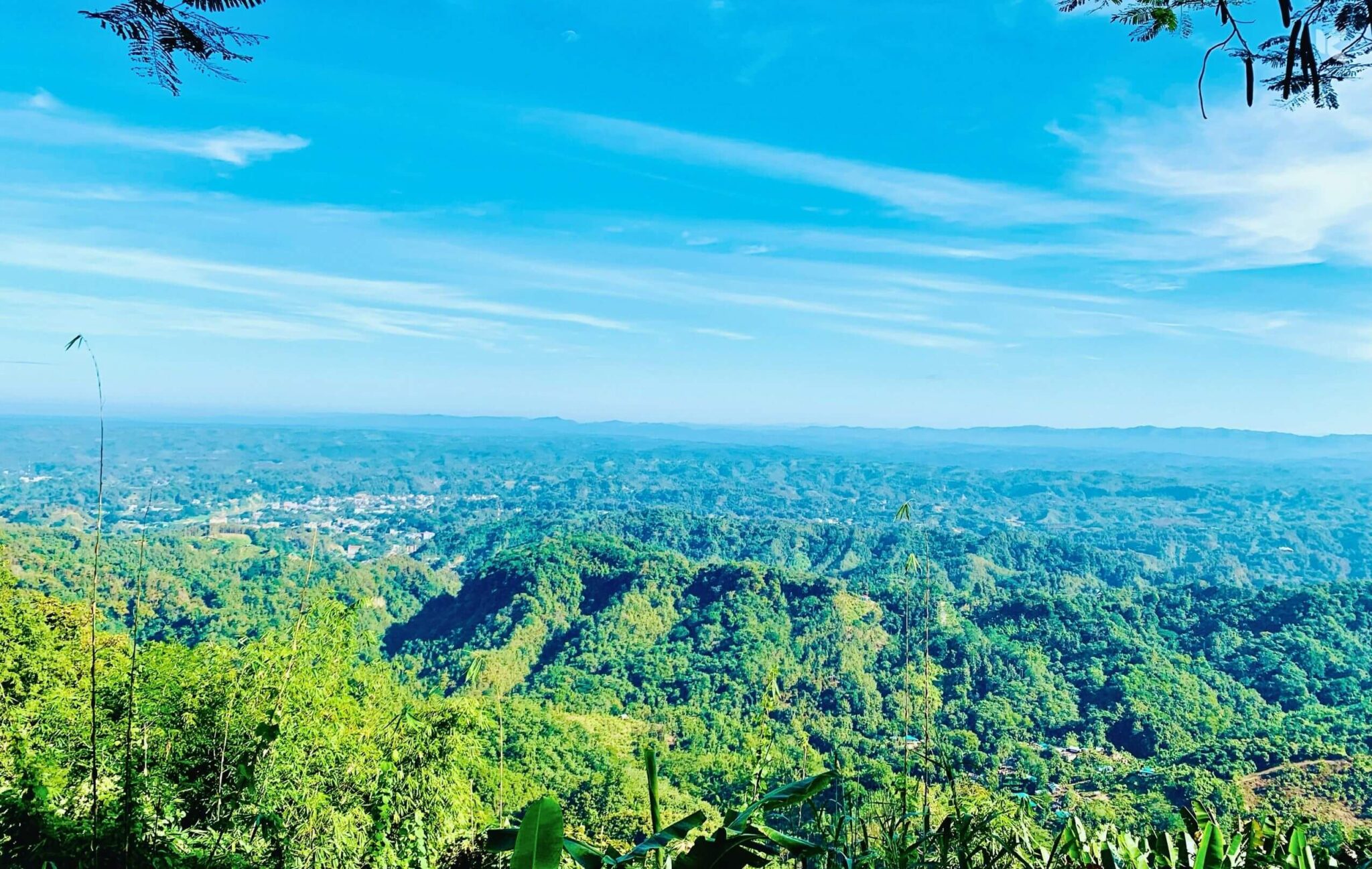
Bandarban sits in the southeastern hills of Bangladesh, part of the Chittagong Hill Tracts, and it looks nothing like the flat, green delta most people picture when they think of this country. Here, the land folds into ridge after ridge of forested hills, rivers cut through narrow valleys, and indigenous communities have lived on these slopes for generations, long before the district had a name on any map most travelers would recognize.
This guide is built for people planning their first trip: backpackers, couples, families, and solo travelers who want a clear, honest picture of what Bandarban actually offers, what it costs, and how to get around without wasting a day figuring things out on the ground.
Prices, permit rules, and transport schedules in this region change fairly often, so treat the numbers here as planning estimates and confirm anything time-sensitive locally before you travel.
Read more: Saint Martin’s Island Travel Guide
Quick Facts
| Location | Chittagong Hill Tracts, Bangladesh |
| District Type | Hill district, bordering Myanmar |
| Known For | Hills, waterfalls, indigenous culture, trekking |
| Major Attractions | Nilgiri, Nilachal, Boga Lake, Keokradong, Nafakhum, Amiakhum |
| Nearest Airport | Shah Amanat International Airport, Chittagong |
| Best Time to Visit | October to March |
| Ideal Trip Length | 3 to 5 days |
| Language | Bengali, plus indigenous languages (Marma, Bawm, Mro, Tripura, Chakma) |
| Currency | Bangladeshi Taka (BDT) |
| Permit Needed | Sometimes, depending on route and nationality |
Why Visit Bandarban
Most of Bangladesh is river delta. Bandarban is the exception, and that alone makes it worth the trip for anyone who has already seen Cox’s Bazar or Sundarbans and wants something different.
The appeal here is layered. There’s the physical landscape: steep hill roads, viewpoints where clouds sit below you rather than above, and waterfalls that only a handful of outsiders visit in a given month. There’s also the cultural layer. Bandarban is home to several indigenous communities, including Marma, Bawm, Mro, Tripura, Chakma, and Tanchangya groups, each with their own language, dress, and customs that are distinct from mainstream Bengali culture.

Trekking is a big draw too. Routes toward Keokradong and Boga Lake attract hikers who want multi-day treks without leaving the country, something that’s genuinely rare in Bangladesh.
Where is Bandarban
Bandarban is a district in the Chittagong Division, roughly 300 kilometers southeast of Dhaka and about 90 kilometers from Chittagong city. It borders Myanmar to the east and shares hill terrain with the neighboring districts of Rangamati and Khagrachari, together forming the Chittagong Hill Tracts region.
The district headquarters, Bandarban town, sits along the Sangu River and serves as the base for most trips into the surrounding hills.
Best Time to Visit
The best time to visit Bandarban is between October and March, when the weather is dry, temperatures are mild, and hill roads are safest for travel.
| Season | Months | Conditions |
|---|---|---|
| Winter (Best) | November to February | Cool, dry, clear skies, ideal for trekking |
| Early Season | October | Weather stabilizing after monsoon, greenery still lush |
| Summer | March to May | Warmer, occasional pre-monsoon showers |
| Monsoon | June to September | Heavy rain, landslide risk, roads to Thanchi and Ruma often restricted |
Waterfalls like Nafakhum and Amiakhum look their fullest during and right after monsoon, but the same rain makes the roads and river routes genuinely dangerous. If your main goal is trekking or reaching Boga Lake and Keokradong, stick to winter. If you’re mainly chasing waterfall photography and are comfortable with more risk and mud, early October can work, but always check current road conditions before committing to a monsoon trip.
How to Get There
Bandarban is reached by direct bus from Dhaka (roughly 8 to 10 hours) or via Chittagong, which also has the nearest airport.
By Bus: Several bus operators run overnight coaches from Dhaka’s Fakirapool or Saidabad terminals directly to Bandarban town. This is the most common route for domestic travelers and budget-conscious backpackers.
By Air: Fly into Shah Amanat International Airport in Chittagong from Dhaka (around 45 minutes), then take a local bus, CNG auto-rickshaw, or hired car for the roughly 2 to 3 hour road journey to Bandarban town.
By Train Plus Road: Take a train from Dhaka to Chittagong, then continue by bus or car to Bandarban. This works well if you prefer trains and want to combine the trip with a stop in Chittagong city.
Transportation Inside Bandarban
Getting around inside the district looks different from getting to it. The hill roads are narrow, steep, and not always well maintained, so vehicle choice matters more here than in most parts of Bangladesh.
| Mode | Best For | Notes |
|---|---|---|
| Chander Gari (open jeep) | Hill routes to Chimbuk, Ruma, Nilgiri | Shared or reserved, the classic way to travel these roads |
| CNG Auto-rickshaw | Short trips within town | Cheap, widely available near the bus stand |
| Motorbike Rental | Independent travelers | Requires confidence on steep, winding roads |
| Boat | Sangu River routes to Thanchi, Remakri | Needed for Nafakhum and Amiakhum access |
| Walking/Trekking | Boga Lake, Keokradong | Local guide strongly recommended |
Chander gari, the open-back jeeps with bench seating, are practically a symbol of Bandarban travel. They handle the steep gradients better than regular cars and are usually shared with other travelers heading in the same direction, which keeps costs down.
Read more: Cox’s Bazar Travel Guide & Trip Planner
Entry Fees and Permits
Some viewpoints and resorts inside Bandarban charge a small entrance fee, generally a modest amount in Bangladeshi Taka, and this can change without much notice, so budget a little extra rather than relying on an exact figure.
Permit rules are the more important thing to understand before you go. Routes toward Thanchi, Remakri, Nafakhum, and Amiakhum pass through areas with military checkpoints, and travelers, particularly foreign nationals, are sometimes required to register with local authorities or the army before proceeding. This has varied over the years depending on the security situation in the Hill Tracts.
Do not assume the rules that applied on someone else’s trip last year still apply now. Check directly with the Bandarban Deputy Commissioner’s office, a registered local guide, or a Bangladesh Tourism Board resource shortly before your trip, and be prepared to show identification at checkpoints along hill routes.
Top Things to Do in Bandarban
- Watch sunrise from Nilgiri, one of the highest and most developed viewpoints in the district
- Visit Buddha Dhatu Jadi (the Golden Temple), the largest Buddhist temple in Bangladesh
- Take a boat ride on the Sangu River toward Thanchi
- Trek to Boga Lake and, if time and fitness allow, continue to Keokradong
- Explore Meghla, a lake and park area close to town with a hanging bridge and cable car
- Visit Shoilo Propat, a roadside waterfall easy to reach without a long trek
- Spend an evening in Bandarban town trying local Marma or Bawm food
- Photograph the terraced hill villages along the Chimbuk Hill road
Best Viewpoints and Natural Attractions
Bandarban doesn’t have beaches, but it has an equivalent draw in its hilltop viewpoints, waterfalls, and lakes, each with its own character.
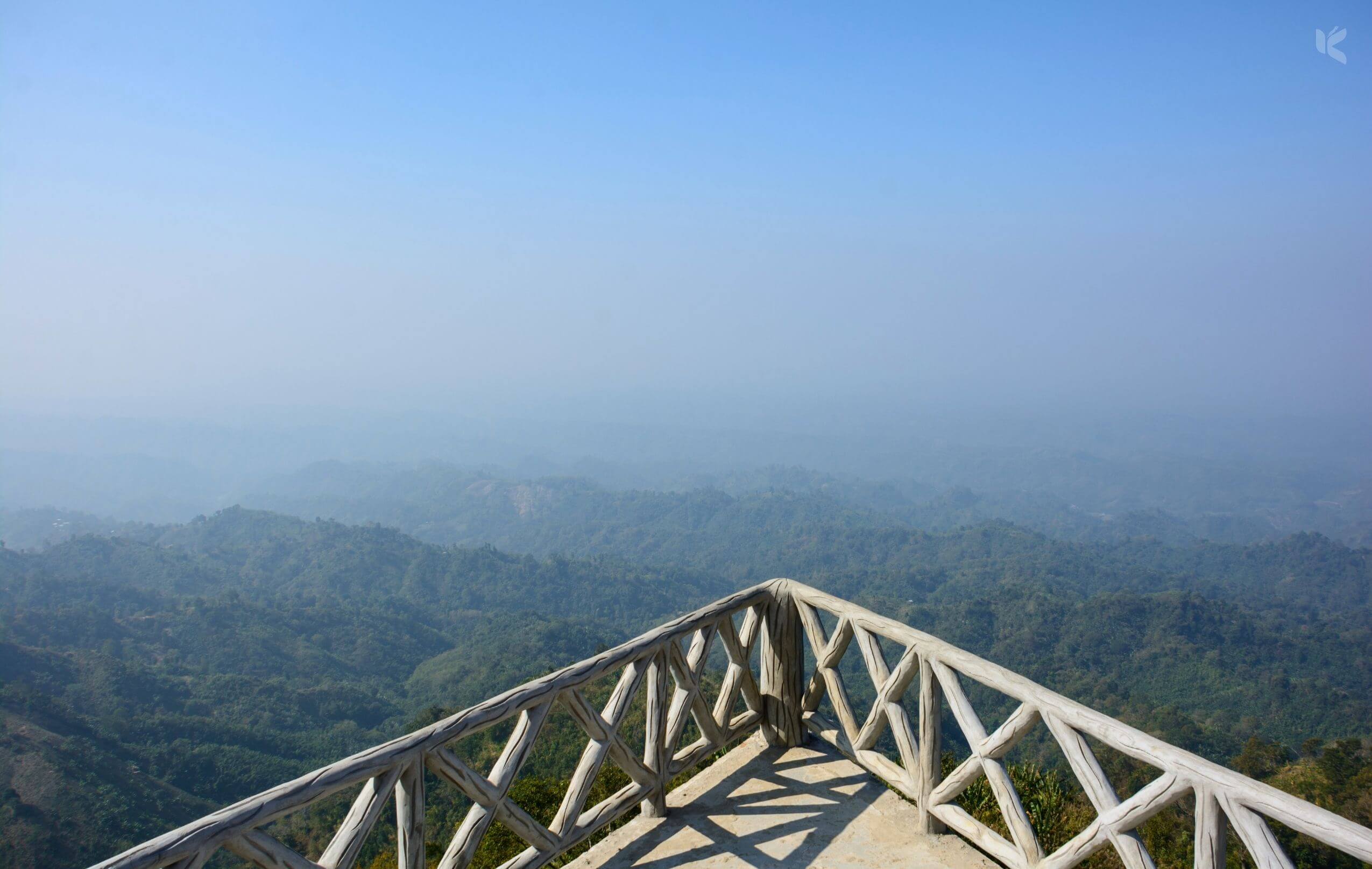
- Nilgiri is the most visited viewpoint, sitting at a significant elevation with a resort on-site. On a clear morning, you can watch clouds settle into the valleys below.
- Nilachal, closer to Bandarban town, is a smaller but still scenic hill viewpoint, easier to combine with a half-day itinerary.
- Boga Lake (locally called Bogakine) is a crater-shaped lake considered sacred by the Bawm community. It sits near Ruma and is usually reached after a trek or a jeep ride followed by a short hike.
- Keokradong is among the higher named peaks in the country and a common extension for trekkers already at Boga Lake. It requires a proper multi-hour trek and a local guide.
- Nafakhum Waterfall, reached via boat to Remakri followed by a walk, is often described as the largest waterfall in Bangladesh by water volume. It’s one of the more physically demanding attractions in the district to reach.
- Amiakhum Waterfall goes even deeper into Thanchi upazila and requires a longer combination of boat, jeep, and trekking. It’s usually attempted by travelers with more time and a higher tolerance for rough terrain.
Nearby Attractions
If your trip extends beyond Bandarban proper, Rangamati and Khagrachari, the two neighboring hill districts, offer their own lakes, hanging bridges, and indigenous communities, and are worth considering if you have a week rather than a long weekend. Chittagong city, with its port history and beaches at Patenga, also works well as a stopover on the way in or out.
Suggested 3-Day Itinerary
Day 1: Arrival and Bandarban Town
Arrive by morning bus or flight-plus-road transfer. Check into your hotel, then spend the afternoon at Meghla and Nilachal, both close enough to town to fit into one day without an early start. In the evening, walk along the Sangu River and have dinner in town.
Day 2: Chimbuk and Nilgiri
Hire a chander gari early in the morning for the drive toward Chimbuk Hill and Nilgiri. Plan to reach Nilgiri before midday, since cloud cover often rolls in by afternoon. Return to Bandarban town by evening, or stay overnight near Ruma if you’re continuing toward Boga Lake the next day.
Day 3: Boga Lake Trek
If you stayed near Ruma, start early for the trek to Boga Lake. This is a full-day activity with a local guide, and it’s the closest most short-trip travelers get to a genuine Hill Tracts trekking experience. Return to Bandarban town or Chittagong in the evening, depending on your departure plans.
Travelers with 5 or more days can extend this itinerary to include Keokradong, or the Thanchi to Nafakhum boat and trek route, both of which need at least a full extra day each.
Where to Stay
Budget: Simple guesthouses and hotels in Bandarban town cover the budget range, generally offering basic rooms with fans or air conditioning and shared or private bathrooms.
Mid-Range: Several hill-view hotels and small resorts around town and along the Chimbuk road offer more comfort, private balconies, and better dining options, at a moderate step up in price.
Luxury and Resort-Style Stays: Nilgiri’s army-managed resort and a handful of hill resorts near town offer the most scenic and comfortable stays in the district, though rooms here book up quickly during winter weekends and holidays.
Beach-Style / Riverside Stays: Bandarban doesn’t have beach resorts, but a few properties along the Sangu River offer a similar relaxed, water-facing feel, which is the closest equivalent here.
Book resort-style stays, especially at Nilgiri, well ahead of winter weekends. Availability and pricing shift with the season, so confirm directly with the property before finalizing your itinerary.
Where to Eat
Bandarban town has a mix of standard Bangladeshi restaurants serving rice, curry, and grilled items, alongside smaller establishments run by Marma and Bawm families that serve regional specialties not found elsewhere in the country. Hotel restaurants tend to be reliable for travelers who want familiar options, while roadside spots near the Sangu River are worth trying for fresher, cheaper local food.
Local Foods to Try
- Bamboo chicken, chicken marinated and cooked inside a bamboo stalk over open fire
- Fresh river fish from the Sangu, often grilled or cooked in a light curry
- Bamboo shoot curry, a staple in Marma and Bawm cooking
- Local variations of pork and chicken curry, more common here than in mainstream Bangladeshi cuisine due to indigenous culinary traditions
- Sticky rice preparations, sometimes served with jungle vegetables
Some of these dishes use ingredients or cooking methods tied to specific indigenous communities, so trying them is also a way to engage respectfully with local culture, provided you ask before assuming what’s in a dish.
Estimated Travel Budget
These figures are rough planning ranges in BDT per person per day, based on typical traveler patterns. Actual costs shift with season, group size, and where you eat and sleep, so treat this as a starting point rather than a fixed budget.
Budget Traveler
| Category | Estimated Cost (BDT/day) |
|---|---|
| Accommodation | 500–1,000 |
| Food | 300–500 |
| Local Transport | 200–400 |
| Activities/Entry Fees | 100–300 |
| Estimated Daily Total | 1,100–2,200 |
Mid-Range Traveler
| Category | Estimated Cost (BDT/day) |
|---|---|
| Accommodation | 1,500–3,500 |
| Food | 600–1,000 |
| Local Transport | 500–1,000 |
| Activities/Entry Fees | 300–600 |
| Estimated Daily Total | 2,900–6,100 |
Luxury Traveler
| Category | Estimated Cost (BDT/day) |
|---|---|
| Accommodation | 4,000–8,000+ |
| Food | 1,200–2,000 |
| Local Transport | 1,000–2,000 |
| Activities/Entry Fees | 500–1,000 |
| Estimated Daily Total | 6,700–13,000+ |
Chander gari and boat hire costs for multi-day treks toward Boga Lake, Nafakhum, or Amiakhum are usually negotiated separately and split among a group, which can bring per-person cost down significantly. Confirm current rates locally, since these vary by season and demand.
Read more: 15 Tips for Traveling to Bangladesh
Packing List
- Sturdy trekking shoes with good grip for muddy or rocky trails
- Light rain jacket, even outside monsoon season
- Warm layer for early morning viewpoint visits, since hill mornings are noticeably cooler
- Power bank, since electricity access can be unreliable in remote areas
- Cash in small denominations, as card payment options are limited outside town
- Basic first aid kit, including anti-diarrheal medication and blister care
- Reusable water bottle and water purification tablets
- Modest clothing that covers shoulders and knees, useful both for religious sites and for respectful interaction with indigenous communities
Safety Tips
- Hill roads can be steep and poorly lit at night, so avoid unnecessary night travel between towns
- Landslide risk increases sharply during monsoon; postpone remote treks if heavy rain is forecast
- Always travel with a registered local guide for treks toward Boga Lake, Keokradong, Nafakhum, or Amiakhum
- Carry printed or digital copies of identification, since checkpoints along hill routes may ask for it
- Mobile network coverage drops out in several remote areas, so inform someone of your route before setting out
- Swim only in areas locals confirm are safe, since river currents near waterfalls can be stronger than they appear
Travel Tips
- Book chander gari or guides a day in advance during peak winter season, when demand is high
- Start hill viewpoint visits early, since cloud cover tends to build up by early afternoon
- Carry cash, since ATMs are limited outside Bandarban town
- Learn a few basic Bengali greetings; it goes a long way with local hosts and drivers
- Confirm road conditions to Thanchi or Ruma the morning of travel, since access sometimes changes with little notice
Local Culture
Bandarban’s cultural mix means etiquette here isn’t identical to mainstream Bangladeshi custom, and it’s worth understanding some of the differences before you go.
Greetings: A simple smile and a polite “Assalamu Alaikum” works with the Bengali-speaking population, while a friendly nod or “Kyay zu tin ba de” is appreciated with Marma hosts, though you’re not expected to know indigenous phrases fluently.
Dress Expectations: Modest clothing covering shoulders and knees is respectful in both religious sites and indigenous villages, even though standards are generally more relaxed here than in conservative rural lowland areas.
Religious Customs: Many indigenous communities in Bandarban practice Buddhism, alongside Christian and animist traditions in some groups. At temples like Buddha Dhatu Jadi, remove shoes before entering and keep noise to a minimum.
Photography Etiquette: Always ask before photographing people, especially in indigenous villages. Some communities are used to tourist cameras; others find it intrusive. When in doubt, ask your guide to help you request permission.
Tipping: Tipping isn’t strictly required but is appreciated for guides, boat drivers, and porters on multi-day treks, especially given the physical difficulty of the routes they manage.
Behavior at Local Attractions: Avoid loud behavior at religious sites and be mindful that some villages are lived-in communities, not open-air museums, so treat homes and private spaces with the same respect you’d expect at home.
Read more: Best Places to Visit in Bangladesh
Responsible Travel
Bandarban’s indigenous communities have faced real pressure from outside development and tourism growth, so travel here carries a bit more responsibility than a typical beach trip. Hire local guides rather than outside operators where possible, since this keeps income within the communities you’re visiting. Avoid leaving plastic waste on trekking routes, since waste management infrastructure in remote hill areas is limited. Ask before photographing people or homes, and be willing to accept “no” without pushing. If you’re buying handicrafts, buying directly from local artisans rather than resellers puts more money into the community that made them.
Frequently Asked Questions
Is Bandarban safe for tourists?
Bandarban is generally safe for tourists who follow standard precautions, use local guides for remote treks, and stay updated on current road and security conditions before heading to remote areas near Thanchi or the Myanmar border.
Do foreigners need a permit to visit Bandarban?
Permit requirements vary by route and change periodically based on the security situation in the Hill Tracts. Confirm current rules with the Deputy Commissioner’s office or a registered local guide before your trip.
How many days do I need in Bandarban?
Three days covers the main viewpoints and Boga Lake trek. Five or more days allows time for Keokradong or the Nafakhum and Amiakhum waterfall routes.
What is the best time to visit Bandarban?
The best time is October through March, when the weather is dry, roads are safer, and trekking conditions are ideal.
How do I get from Dhaka to Bandarban?
Direct overnight buses run from Dhaka to Bandarban town, taking roughly 8 to 10 hours. Flying to Chittagong and continuing by road is faster overall.
Is Nafakhum Waterfall worth the trip?
Yes, for travelers who don’t mind a demanding journey involving a boat ride and a trek. It’s considered one of the most impressive waterfalls in Bangladesh by water volume.
Can beginners trek to Boga Lake?
Yes, with a local guide and reasonable fitness. It’s more approachable than Keokradong, which involves a longer and steeper trek.
What should I pack for Bandarban?
Pack sturdy shoes, a light rain layer, a warm layer for early mornings, cash in small denominations, and basic first aid supplies.
Are there ATMs in Bandarban?
ATMs are available in Bandarban town but limited or absent in remote areas like Ruma and Thanchi, so carry sufficient cash before heading out.
What food should I try in Bandarban?
Bamboo chicken and bamboo shoot curry are regional specialties worth trying, along with fresh river fish from the Sangu River.
Is Bandarban good for a family trip?
Yes, for the town area, Meghla, Nilachal, and Nilgiri, which don’t require heavy trekking. Remote treks like Keokradong are better suited to older kids or adults.
What is chander gari?
Chander gari is an open-back jeep commonly used for hill routes in Bandarban, offering better handling on steep, winding roads than standard vehicles.
Do I need a guide to visit Bandarban?
A guide isn’t required for the town area and nearby viewpoints, but is strongly recommended, and sometimes required by local authorities, for treks to Boga Lake, Keokradong, Nafakhum, and Amiakhum.
Final Thoughts
Bandarban rewards travelers who give it more than a rushed weekend. The town area and its close-by viewpoints are easy enough for a short trip, but the district’s real character shows up further out, on the jeep road to Chimbuk, on the trail to Boga Lake, and along the river toward Thanchi.
If you’re planning more trips around Bangladesh, Kuhudak has other guides covering different regions of the country worth reading before you plan your next route.