Dhaka does not ease you in gently. From the moment you step outside the airport, the city announces itself with blaring horns, a swarm of green CNGs weaving through traffic, and the distant smell of biryani drifting across a narrow lane. It is chaotic, yes. But it is also one of the most culturally layered capitals in South Asia, and for travelers willing to lean into the noise, it rewards you at every turn.
This guide covers everything you need to plan a trip to Dhaka, from the best time to visit and getting around to the food you cannot leave without eating.
Read more: Sundarbans Travel Guide with Best Places to Visit
Quick Facts
| Country | Bangladesh |
| Region | Dhaka Division |
| Status | Capital City |
| Language | Bengali (English widely understood in hotels and business areas) |
| Currency | Bangladeshi Taka (BDT) |
| Time Zone | BST (UTC+6) |
| Weekend | Friday and Saturday |
| Emergency Number | 999 |
| Airport | Hazrat Shahjalal International Airport (DAC) |
| Population | Approximately 22 to 23 million (metro area) |
| Religion | Predominantly Islam; also Hindu, Buddhist, Christian communities |
Why Visit Dhaka
Travelers who come to Dhaka expecting a polished tourist trail leave pleasantly confused. The city has no single drawcard. Instead, it works on you slowly through the smells of Old Dhaka’s kitchens, the Mughal stonework of Lalbagh Fort, the chaos of Sadarghat’s river port at dusk, and the warmth of locals who are genuinely pleased to see international visitors.
Dhaka is a place where 400 years of history coexist with a roaring present. You can walk through a 17th-century fort in the morning and eat arguably the best biryani of your life by noon. For travelers interested in authentic, off-the-beaten-track South Asia, few cities compare.
Where Is Dhaka
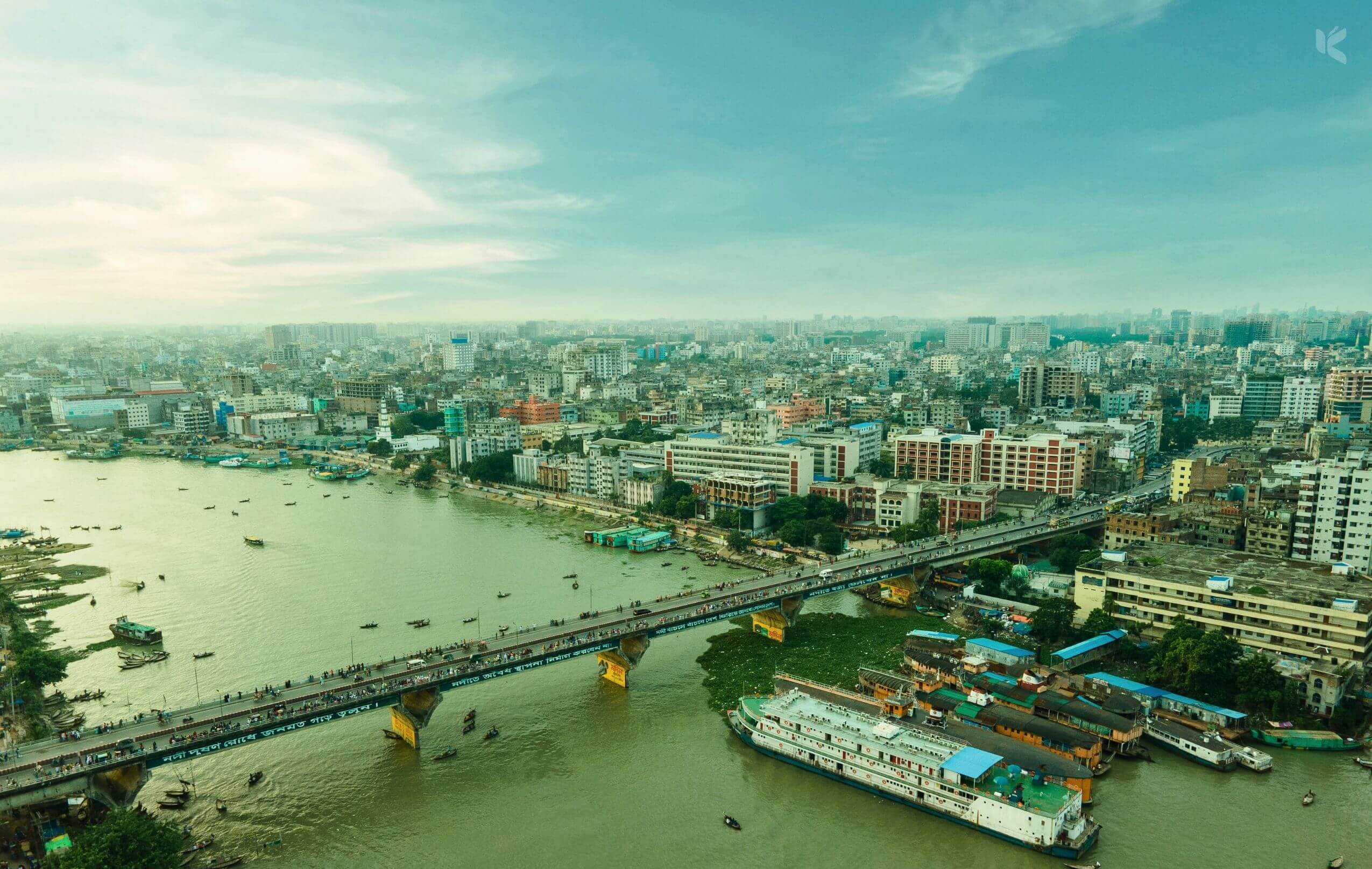
Dhaka sits at the heart of Bangladesh, a delta nation in South Asia bordered by India on three sides and Myanmar to the southeast. The city lies near the confluence of the Buriganga, Turag, and Balu rivers, which shaped its rise as a trading and administrative center under Mughal rule.
It is roughly 1,200 km east of Delhi, about 280 km from Kolkata, and around 590 km from Yangon. Most international travelers fly into Dhaka, though train connections from Kolkata via the Maitree Express are possible.
Read more: Cox’s Bazar Travel Guide & Trip Planner
Best Time to Visit Dhaka
November through February is the best time to visit Dhaka. Temperatures settle between 18°C and 28°C (64°F to 82°F), humidity drops to more comfortable levels, and the skies stay mostly clear. These months are ideal for walking the streets of Old Dhaka, visiting outdoor sites, and generally moving around without the added ordeal of heat or rain.
October is a reasonable shoulder option as the monsoon tapers off, though humidity lingers. March begins to warm quickly, and by April the heat can be punishing, with temperatures reaching above 38°C (100°F) on some days.
The monsoon runs from June through September. Heavy rains cause localized flooding, traffic disruption worsens significantly, and certain low-lying areas of Old Dhaka become difficult to navigate. That said, budget travelers can find much cheaper hotel rates during this period if they are prepared.
| Month | Temperature (Avg) | Conditions | Recommended |
|---|---|---|---|
| November | 22–28°C | Dry, comfortable | Yes |
| December | 18–25°C | Cool, clear | Best |
| January | 15–24°C | Coolest month | Best |
| February | 18–28°C | Mild, festivals | Yes |
| March | 22–32°C | Warming, manageable | Acceptable |
| April–May | 30–38°C | Hot, pre-monsoon | Not ideal |
| June–September | 28–35°C | Monsoon season | Avoid unless budget-focused |
| October | 26–32°C | Humid, improving | Acceptable |
How to Get to Dhaka
By Air
Most international travelers arrive at Hazrat Shahjalal International Airport (DAC), located in the Uttara area in northern Dhaka. The airport is around 15 to 20 km from the city center, though traffic can stretch that journey to an hour or more during peak hours.
Direct flights connect Dhaka to major hubs including Dubai, Doha, Kuala Lumpur, Singapore, Bangkok, Kolkata, Istanbul, and London. Biman Bangladesh Airlines is the national carrier; IndiGo, Qatar Airways, Emirates, Cathay Pacific, and several other airlines also operate routes to DAC.
From the airport: Uber and Pathao are the most reliable options for getting into the city. Prices are transparent and you avoid negotiating. Avoid unlicensed tout drivers at the arrival hall exit. The approved taxi counter is available if you prefer a pre-arranged fare.
By Train
The Maitree Express runs between Kolkata (Kolkata Station) and Dhaka (Kamalapur), operating a few times per week. Journey time is approximately ten to twelve hours. Visas must be obtained in advance. Verify the current schedule through Bangladesh Railway before booking, as frequency can change.
By Bus and Coach
International buses run between Dhaka and Indian border cities including Kolkata and Agartala. Journey times vary significantly depending on border crossing times. This is a viable option for overland travelers, but research current border crossing procedures in advance.
Read more: Saint Martin’s Island Travel Guide
Getting Around Dhaka
Ride-Hailing Apps (Recommended)
Uber and Pathao both operate in Dhaka and are by far the easiest transport option for foreign visitors. You get upfront pricing, GPS tracking, and avoid fare disputes entirely. Uber works for cars and CNGs; Pathao includes motorcycle taxis, which cut through gridlock faster during peak hours.
Download both apps before arrival and get a local SIM card at the airport. Grameenphone, Banglalink, and Robi all offer affordable tourist SIM packages with data.
CNG Auto-Rickshaws
The ubiquitous green three-wheelers powered by compressed natural gas cover most of the city. Fares are negotiated rather than metered in most cases. Check the equivalent Uber/Pathao fare for the same route to know a fair price before negotiating. Typical trips within central areas run between 50 and 200 BDT.
Cycle Rickshaws
Rickshaws are ideal for short distances, particularly within Old Dhaka where narrow lanes make them the only practical option. Always agree on the fare before you board. A short hop within Old Dhaka typically costs 30 to 80 BDT, though rates near tourist spots trend higher.
Dhaka Metro (MRT Line 6)
The Dhaka Metro Rail runs north to south through the city, from Uttara in the north to Motijheel. It is clean, reliable, and air-conditioned, a genuine contrast to street traffic. Pick up a Rapid Pass card at any station for contactless boarding. The metro is particularly useful for reaching Dhanmondi, Farmgate, and Agargaon from the north.
Local Buses
Public buses reach almost everywhere but are often overcrowded and confusing for non-Bengali speakers. They are cheap, but for first-time visitors, ride-hailing apps are far less stressful.
Top Things to Do in Dhaka
Old Dhaka Walking Tour
No visit to Dhaka is complete without time in Old Dhaka (Puran Dhaka). The historic core of the city stretches roughly from Sadarghat in the south to Chawkbazar in the north and contains most of Dhaka’s Mughal-era heritage sites. The streets here are narrow, dense, and full of life. Potters’ workshops, wedding decoration vendors, sweet shops, and spice wholesalers crowd the lanes.
Walk the alleyways of Shakhari Bazar, the old Hindu conch-shell workers’ street, where artisan families have lived and worked for generations. It is visually striking and offers an insight into Old Dhaka’s multi-religious past.
Lalbagh Fort
Lalbagh Fort is Dhaka’s most recognizable historical monument, a 17th-century Mughal fortification that was never fully completed. Construction began in 1678 under Prince Shahzada Azam and was halted after the death of Pari Bibi, daughter of Nawab Shaista Khan, who is buried within the complex.
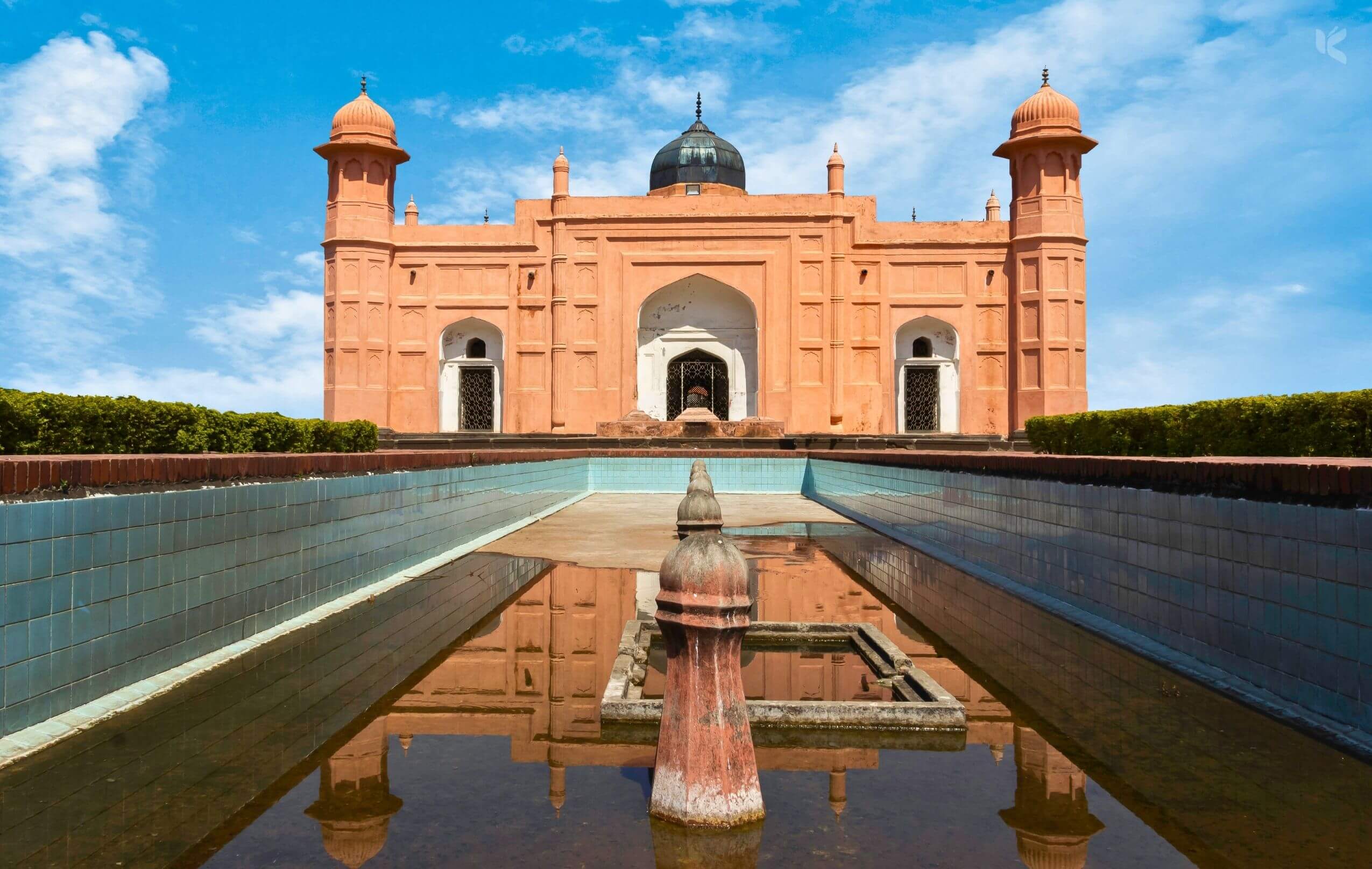
The fort contains three main structures: the Tomb of Pari Bibi, the Audience Hall and Hammam (now a museum), and a three-domed mosque. The gardens are well maintained. Budget one to two hours.
Entry fee: BDT 20 (Bangladeshi nationals), BDT 100 (SAARC countries), BDT 200 (other foreign nationals). Verify current fees before visiting.
Opening hours: Open most days except Sunday; hours vary seasonally. Typically 10:00 AM to 5:00 PM. Closed during Friday prayer hours. Always confirm current hours in advance.
Ahsan Manzil (Pink Palace)
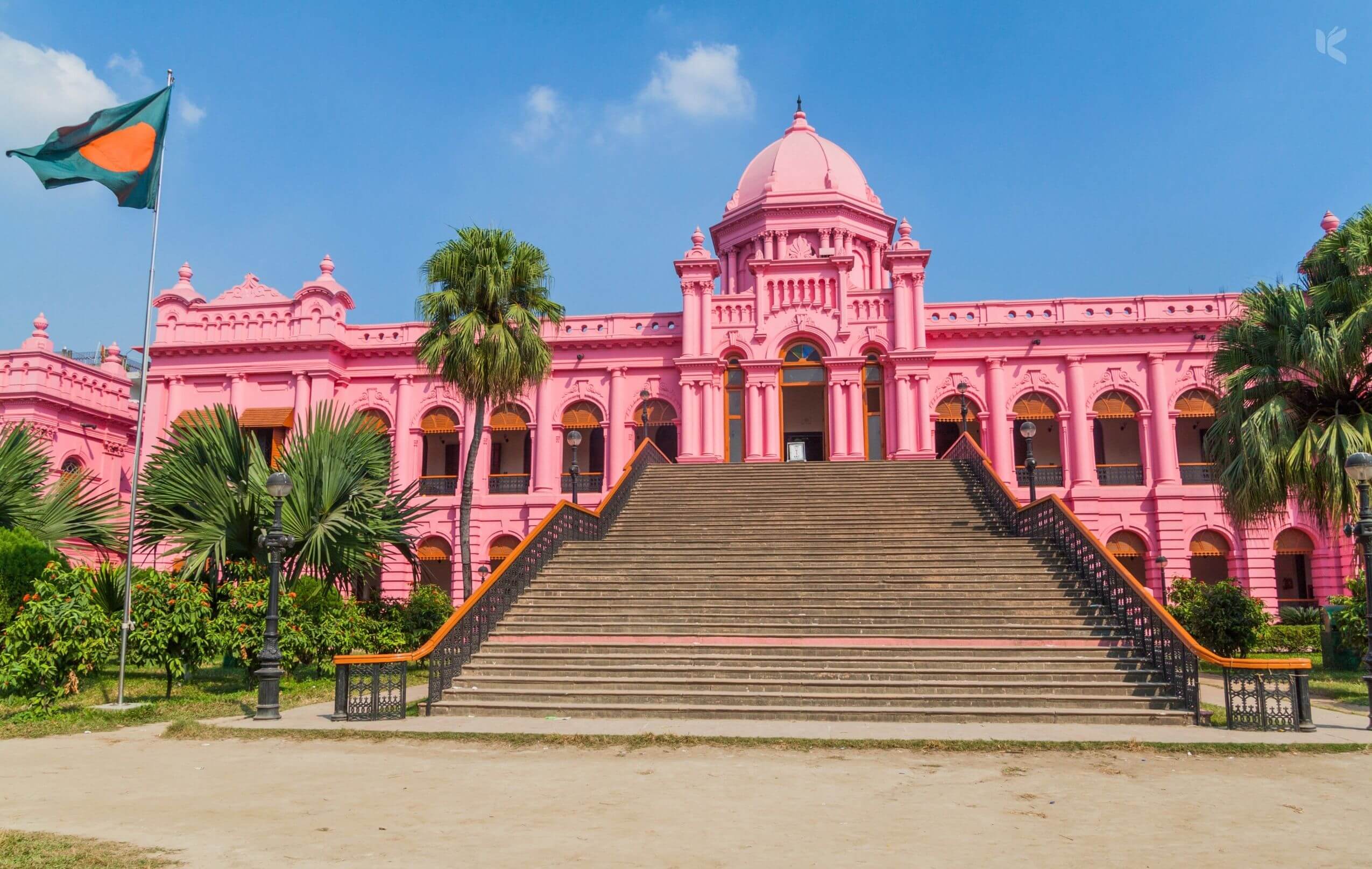
The Pink Palace was the official residential palace of the Nawabs of Dhaka in the 19th century. Today it operates as a museum with 23 galleries spread across 31 rooms, displaying period furniture, royal portraits, household artifacts, and items belonging to the Nawab family.
The building’s pink facade, large central dome, and riverside setting make it one of the most photographed sites in the city. Ahsan Manzil is particularly popular in the late afternoon light.
Opening hours: Saturday to Wednesday, 9:00 AM to 5:00 PM; Friday, 3:00 PM to 5:00 PM. Closed Thursday. Verify before visiting.
Star Mosque (Tara Masjid)
The Star Mosque in Armanitola, Old Dhaka, is decorated with star-shaped patterns made from Chinese porcelain tiles. It dates to the early 18th century and was significantly expanded in the 20th century. As an active mosque, it requires appropriate clothing and quiet behavior from visitors. Photography is permitted in the courtyard.
Sadarghat River Port
Sadarghat is Dhaka’s main river port and one of the most visually dramatic places in the city. Enormous river ferries depart from here to Barisal, Khulna, and dozens of river towns across southern Bangladesh. The port is busiest in the mornings and evenings, with vessels of every size loading cargo and passengers under a blur of activity.
Walk along the ghats, watch the wooden boats cross the Buriganga, and take in the scale of this river culture. It is chaotic, photogenic, and completely unlike anything most international visitors have encountered.
Dhakeshwari National Temple
Dhakeshwari Temple is considered Bangladesh’s most important Hindu temple and the origin of the city’s name (“Dhakeshwari” translates roughly to “Goddess of Dhaka”). It is an active place of worship and particularly vibrant during Durga Puja in October.
Bangladesh National Museum
Located in Shahbag, the Bangladesh National Museum contains archaeological finds, folk art, natural history exhibits, and extensive collections covering the country’s history from ancient times through independence. It is a useful starting point for understanding Bangladesh’s context before exploring older sites.
Opening hours: Tuesday to Saturday, 9:30 AM to 5:00 PM; Friday 3:30 PM to 8:00 PM; Sunday and Monday closed. Verify before visiting.
Hatirjheel Waterfront
Hatirjheel is a large urban lake and waterfront development connecting Gulshan, Banani, Rampura, and Tejgaon. It opened in 2013 and offers a rare open space in the city with walking paths, bridges, and evening lights. It is a popular local hangout and a pleasant contrast to the congestion elsewhere.
Liberation War Museum
The Liberation War Museum in Agargaon documents Bangladesh’s 1971 War of Independence from Pakistan. It is thoughtfully organized and sobering. For international visitors interested in the country’s history, this is essential context for understanding modern Bangladesh.
Day Trip: Sonargaon and Panam City
Sonargaon, located about 27 to 38 km southeast of Dhaka, was the medieval capital of Bengal. The main draw is Panam Nagar, the ruins of a 19th-century mercantile town that was once home to Hindu cotton merchants. Rows of crumbling colonial-era mansions line a single cobbled street, creating an eerie, beautiful scene.
The Folk Arts and Crafts Museum and the Goaldi Mosque (dating to the early 16th century) are also within the area. A boat ride on the Meghna River is often included in organized tours.
Journey time from Dhaka is roughly 1.5 hours by car, though traffic adds unpredictability. Plan a full day. Most tours depart at around 8:00 AM.
Read more: Kuakata Travel Guide with Tips and Itinerary
Suggested 2-Day Dhaka Itinerary
Day 1: Old Dhaka and the Mughal City
Start early to beat the heat and the worst of the traffic.
- Morning: Ahsan Manzil, walk along the Buriganga riverfront, then Sadarghat
- Mid-morning: Star Mosque, Shakhari Bazar, Armenian Church of the Holy Resurrection (the oldest church in Dhaka, built 1781)
- Lunch: Haji Biryani on Nazira Bazar Road for kacchi biryani
- Afternoon: Lalbagh Fort (2 hours)
- Evening: Rickshaw ride through Old Dhaka backstreets; try fuchka and jhal muri from a street stall
Day 2: New Dhaka, Museums, and Hatirjheel
- Morning: Bangladesh National Museum (Shahbag)
- Lunch: Dhanmondi or Gulshan restaurant for murgir rezala or biriyani
- Afternoon: Liberation War Museum, then Hatirjheel lakefront walk
- Evening: Dhanmondi Lake area or a local café in Gulshan
Where to Stay in Dhaka
Dhaka’s hotel scene has improved significantly in recent years. Gulshan and Banani offer the most international-standard options. Old Dhaka has very limited accommodation and is not generally recommended as a base for tourists.
Budget (BDT 1,500 to 3,500 per night / approx. USD 14 to 32): Budget guesthouses cluster in areas like Green Road, Dhanmondi, and near Shahbag. Standards vary considerably. Look for places with verified reviews. Facilities are basic: a clean room, working AC, and Wi-Fi.
Mid-range (BDT 4,000 to 7,000 per night / approx. USD 36 to 64): This range offers solid comfort in Gulshan and Dhanmondi. Hotels in this tier typically include breakfast, consistent Wi-Fi, and in-house dining. Several business hotels in Banani and Gulshan 1 fall here.
Luxury (BDT 10,000 and above / approx. USD 90+): Dhaka has a handful of internationally branded properties. The InterContinental Dhaka (Minto Road), Pan Pacific Sonargaon (Kawran Bazar area), Westin Dhaka (Gulshan), and Amari Dhaka are the main choices for business and upscale travelers. These properties offer swimming pools, multiple restaurants, spa facilities, and airport transfer services.
Note: Prices fluctuate with season and demand. Always check current rates directly with hotels or through booking platforms before traveling.
Where to Eat and What to Try
Old Dhaka
Haji Biryani on Kazi Alauddin Road is perhaps the most famous restaurant in Bangladesh. It serves kacchi biryani: marinated mutton slow-cooked with fragrant basmati rice, potatoes, saffron, ghee, and whole spices using the sealed-pot dum method. Go by 1:00 PM because they often sell out. There is no reservation system. You sit, you eat, you leave.
Nanna Biryani in Becharam Deori is another institution that Old Dhaka locals argue competes on equal terms.
For bakarkhani, the thick, slightly sweet bread that is Old Dhaka’s traditional breakfast accompaniment, head to Chawkbazar in the early morning when it comes fresh from coal ovens.
Read more: 15 Tips for Traveling to Bangladesh
Local Foods to Try
| Dish | Description |
|---|---|
| Kacchi Biryani | Mutton and rice slow-cooked together with potatoes, saffron, and spices |
| Morog Polao | Aromatic chicken rice dish with cardamom-infused ghee |
| Bakarkhani | Thick, layered flatbread baked in a coal oven; a morning staple |
| Fuchka | Crispy hollow shells filled with spiced mashed potato and tamarind water |
| Jhal Muri | Puffed rice tossed with mustard oil, onion, chili, and spices |
| Halim | Slow-cooked lentil and meat stew, thick and hearty |
| Rezala | Mild white mutton curry cooked in yogurt and cream, a Dhaka specialty |
| Jali Kebab | Finely ground minced meat kebab with a lacy egg coating |
| Mishti Doi | Sweet fermented yogurt, the region’s most beloved dessert |
| Beauty Lacchi | A thick, creamy lassi from the legendary Beauty Laachi shop in Old Dhaka |
Beyond Old Dhaka
Dhanmondi and Gulshan have a wide range of restaurants covering Bangladeshi, Indian, Chinese, Thai, and continental cuisine. Sultan’s Dine (multiple locations) is a reliable and popular choice for kacchi biryani in a sit-down setting with modern facilities. For a street-food evening, the area near Dhaka University (TSC) is excellent for fuchka, chotpoti, jhal muri, and uniquely flavored teas.
Estimated Travel Budget
Prices fluctuate. The figures below are estimates based on available information at the time of writing. Always verify current rates before traveling.
Budget Traveler (Per Day)
| Category | Estimated Daily Cost |
|---|---|
| Accommodation | BDT 1,500–2,500 |
| Food (street food + local restaurants) | BDT 500–800 |
| Transportation (rickshaw + Pathao moto) | BDT 300–500 |
| Entrance fees (1–2 sites) | BDT 200–400 |
| Estimated Daily Total | BDT 2,500–4,200 (approx. USD 23–38) |
Mid-Range Traveler (Per Day)
| Category | Estimated Daily Cost |
|---|---|
| Accommodation | BDT 4,000–7,000 |
| Food (mix of local and mid-range restaurants) | BDT 1,200–2,000 |
| Transportation (Uber + occasional CNG) | BDT 700–1,200 |
| Activities and entrance fees | BDT 500–800 |
| Estimated Daily Total | BDT 6,400–11,000 (approx. USD 58–100) |
Luxury Traveler (Per Day)
| Category | Estimated Daily Cost |
|---|---|
| Accommodation | BDT 12,000–20,000+ |
| Food (hotel restaurants + upscale dining) | BDT 3,000–6,000 |
| Transportation (private car or hotel transfer) | BDT 2,000–4,000 |
| Guided tours and activities | BDT 3,000–8,000 |
| Estimated Daily Total | BDT 20,000–38,000+ (approx. USD 182–345+) |
Packing List
- Lightweight, breathable clothing (cotton preferred)
- Modest clothes (long sleeves or a scarf for mosque and temple visits)
- Comfortable walking shoes with grip (Old Dhaka streets are uneven)
- N95 mask (air quality in Dhaka can be poor, especially in winter months)
- Mosquito repellent (dengue risk exists year-round)
- Bottled water or a water purification method (tap water is not safe to drink)
- Power bank (long days mean heavy phone use for navigation)
- Small cash in BDT denominations (many street vendors and rickshaws only take cash)
- Passport copies stored separately from originals
Safety Tips
Dhaka is not a dangerous city by regional standards, but it requires attentiveness. Violent crime against tourists is rare. The more common challenges are petty theft, transport overcharging, and logistical confusion.
- Use apps for transport. Pathao, Uber, and similar services eliminate fare disputes and give you GPS tracking. Avoid unmarked taxis at the airport.
- Be aware of your phone and bag in crowded markets, on buses, and at transport hubs. Keep valuables in a bag worn across the chest, not a backpack.
- Watch out for common scams: rickshaw drivers claiming broken meters, strangers offering to be unofficial guides (often directing you to commission shops), and inflated currency exchange at the airport.
- Exchange currency at banks or ATMs, not street booths. Get BDT from ATMs in Gulshan or Banani rather than at the airport arrival hall.
- Drink only bottled water. Tap water is not safe. Brush your teeth with bottled water if you have a sensitive stomach.
- Solo female travelers should dress modestly, use app-based transport, and be prepared for some unwanted attention in crowded areas. Sticking to well-known neighborhoods and avoiding isolated streets, especially after dark, is sensible.
- Monitor political news before and during your visit. Bangladesh has experienced periods of civil unrest and political protests that can affect movement, particularly near government buildings. Check your country’s official travel advisory before departure.
- Emergency number: 999 (police, fire, ambulance)
Travel Tips
- Friday and Saturday are the weekend in Bangladesh. Many government-run attractions are closed on Thursday or Friday. Plan your museum visits accordingly.
- Dhaka traffic is genuinely terrible. Journeys that look short on a map can take 45 to 90 minutes in peak-hour traffic. Build extra time into every plan.
- Start early in Old Dhaka. By mid-morning the heat and foot traffic both intensify. Being out by 8:00 AM gives you the best of both.
- Get a local SIM card at the airport. Grameenphone is the most widely recommended network for coverage. Data is cheap and apps become your best friend.
- Download Google Maps offline for Dhaka before arrival. It is reasonably accurate and works well even without data.
- Bargain at markets but not in restaurants or cafés with printed menus.
- ATMs in Gulshan and Banani are reliable. Avoid street money changers.
- Most international restaurants and major hotels accept credit cards. Street food and transport are almost always cash-only.
Read more: Best Places to Visit in Bangladesh
Local Culture
Greetings: The standard greeting is “Assalamu Alaikum” (Arabic: peace be upon you), widely used among Muslim Bangladeshis. The response is “Wa Alaikum Assalam.” For Hindu locals or in secular settings, “Namaskar” is appropriate. A polite smile and nod go a long way. Bangladeshis are generally warm and curious about foreign visitors.
Dress Expectations: Dhaka is more relaxed than many South Asian capitals in terms of dress, but modesty remains important, especially in religious sites and Old Dhaka.
- At mosques: remove shoes, cover your head (for women), cover arms and legs (for both men and women)
- At temples: remove shoes, dress conservatively
- In general Dhaka: lightweight trousers and a shirt or blouse are fine. Shorts are common among expats in Gulshan/Banani but can draw attention in Old Dhaka and more conservative neighborhoods.
Religious Customs: Friday is the main day of prayer for Muslims. The city is quieter in the morning, and many businesses open only in the afternoon. Avoid playing loud music near mosques during prayer times, and be conscious of the Azan (call to prayer) that sounds five times daily.
During Ramadan (dates vary each year), eating, drinking, or smoking in public during daylight hours is disrespectful. Many restaurants close or operate limited hours during this period.
Photography Etiquette: Most Bangladeshis are happy to be photographed, especially if you ask first with a gesture and a smile. In religious spaces, always ask permission before pointing a camera at people in prayer. Avoid photographing military installations, border areas, or government buildings. At Sadarghat, the workers and passengers generally do not mind photographs, but be sensitive and respectful.
Tipping: Tipping is not customary in the same way as in Western countries, but it is appreciated. In restaurants, rounding up the bill or leaving 10% is a kind gesture. Rickshaw pullers and porters appreciate a small tip above the agreed fare for good service.
Responsible Travel
Dhaka’s infrastructure is under significant pressure from its enormous population. A few simple habits make a difference:
- Carry a reusable bag. Single-use plastic bags are a significant pollution problem.
- Do not litter. It sounds obvious, but in the chaos of Old Dhaka, it is easy to follow the crowd.
- Hire local guides when visiting heritage sites like Lalbagh Fort or Sonargaon. It puts money directly in the community and usually results in a richer experience.
- Support family-run tea stalls, sweet shops, and food carts over larger commercial chains when you can.
- Bargain respectfully. Rickshaw pullers work extremely hard for very modest incomes. A few extra taka is nothing to most visitors but meaningful to the driver.
Read more: Best SIM Card in Bangladesh for Tourists
Frequently Asked Questions About Dhaka
Is Dhaka worth visiting?
Yes, particularly for travelers interested in South Asian history, culture, and authentic urban experiences. Dhaka offers Mughal architecture, remarkable street food, vibrant local life, and easy access to other parts of Bangladesh. It is not a city of polished tourist attractions, but it is deeply rewarding for travelers who come with curiosity and patience.
How many days do I need in Dhaka?
Two full days cover the main highlights comfortably. Three to four days allow you to add Sonargaon as a day trip and explore different neighborhoods at a slower pace.
Is Dhaka safe for tourists?
Dhaka is relatively safe for tourists with standard urban precautions in place. Violent crime against foreigners is rare. The main concerns are petty theft, transport scams, and traffic. Use app-based rides, avoid displaying valuables, and check travel advisories from your government before departure.
What is the best area to stay in Dhaka?
Gulshan is the most convenient base for international travelers. It is clean, well-connected, has good restaurants, and offers a range of hotel options. Banani and Dhanmondi are also popular alternatives.
Can I visit Dhaka on a budget?
Yes. Dhaka is one of the more affordable capitals in South Asia. A budget traveler can manage on approximately USD 23 to 38 per day including accommodation, food, and transport.
What is Old Dhaka and should I visit?
Old Dhaka (Puran Dhaka) is the historic southern portion of the city, containing most of Dhaka’s Mughal-era monuments, traditional markets, and culinary landmarks. It is the most culturally rich part of the city and absolutely worth visiting, though it is crowded, loud, and can be disorienting. Going with a guide or with someone who knows the area makes the experience much smoother.
How do I get around without speaking Bengali?
Ride-hailing apps (Uber and Pathao) are your best friend. Type your destination in English and the map handles the rest. For market navigation, Google Translate’s camera function can help. Most hotel staff in mid-range and upscale properties speak at least basic English.
What is the Dhaka Metro Rail and is it useful for tourists?
MRT Line 6 runs north to south through the city. It is clean, reliable, and much faster than road transport for routes along its corridor. Get a Rapid Pass card at any station. Useful for reaching Motijheel, Shahbag, and Uttara without dealing with road traffic.
What should I not miss in Old Dhaka?
Sadarghat river port, Lalbagh Fort, Ahsan Manzil, the Star Mosque, and a meal of kacchi biryani at Haji Biryani or Nanna Biryani.
Is Dhaka vegetarian-friendly?
Challenging, but manageable. Old Dhaka cuisine is heavily meat-based. Mid-range and upscale restaurants in Gulshan and Dhanmondi have more vegetarian options. Indian and Chinese restaurants in the city offer good vegetarian selections.
Do I need a visa for Bangladesh?
Most international visitors require a visa. Bangladesh offers visa on arrival for citizens of many countries, but requirements vary significantly by nationality. Check the official Bangladesh government visa portal or contact your nearest Bangladesh embassy before travel. Obtain your visa before you fly if you are unsure about on-arrival eligibility.
What is the best day trip from Dhaka?
Sonargaon and Panam City, about 30 to 38 km southeast of Dhaka, is the most rewarding day trip available. The abandoned colonial merchant town of Panam Nagar is visually unlike anything in the capital itself.
Dhaka is not everyone’s idea of an easy travel destination. But it is one of the most authentic, and for travelers who lean into the chaos rather than fighting it, the city gives back generously. The food alone justifies a visit. The history layers on top of that. And the people, curious, hospitable, and eager to show a visitor the best of their city, make it memorable in ways that smoother, tidier capitals rarely manage.
If you are building an itinerary for Bangladesh, Dhaka is your starting point and, more often than not, a highlight in its own right.